Industrial-Scale Alkaline Water Electrolysis
We enable our customers to accelerate the energy transition with scalable alkaline water electrolysis technology for industrial green hydrogen production. Backed by over 60 years of electrochemical expertise and more than 600 successful projects, thyssenkrupp nucera delivers electrolyzers designed for maximum lifetime, high availability, and dynamic operation in demanding industrial environments.
World-leading electrolysis technologies
1.5 GW/yr
supply chain established
>10 GW
of capacity installed
>3 GW
contracted capacity
Our Global Green Hydrogen Reference Projects
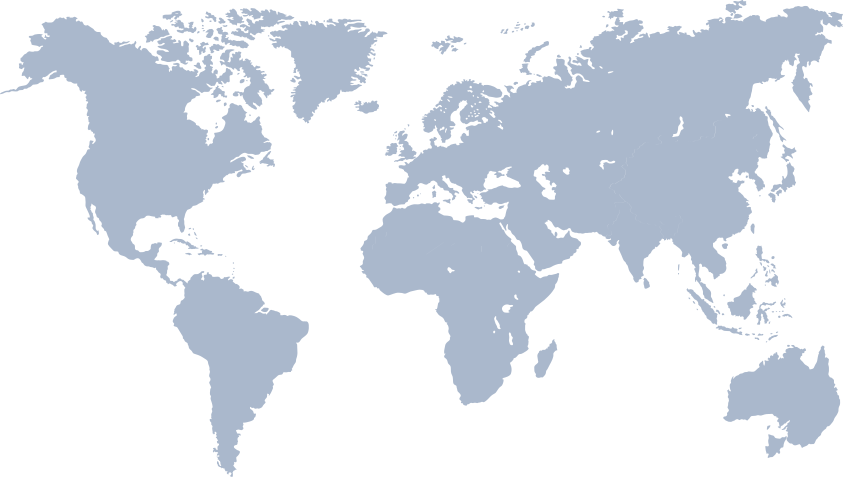
Our alkaline water electrolysis (AWE) technology powers some of the world’s largest industrial green hydrogen projects – from Saudi Arabia to Sweden. With over 3 GW in our order backlog and a total of 2.7 GW delivered across 2024 and 2025, we enable scalable hydrogen production through a fully established gigawatt-scale supply chain. Discover our selected global green hydrogen reference projects.
Locations
Projects
- Europe
-

Stegra
Holland Hydrogen 1
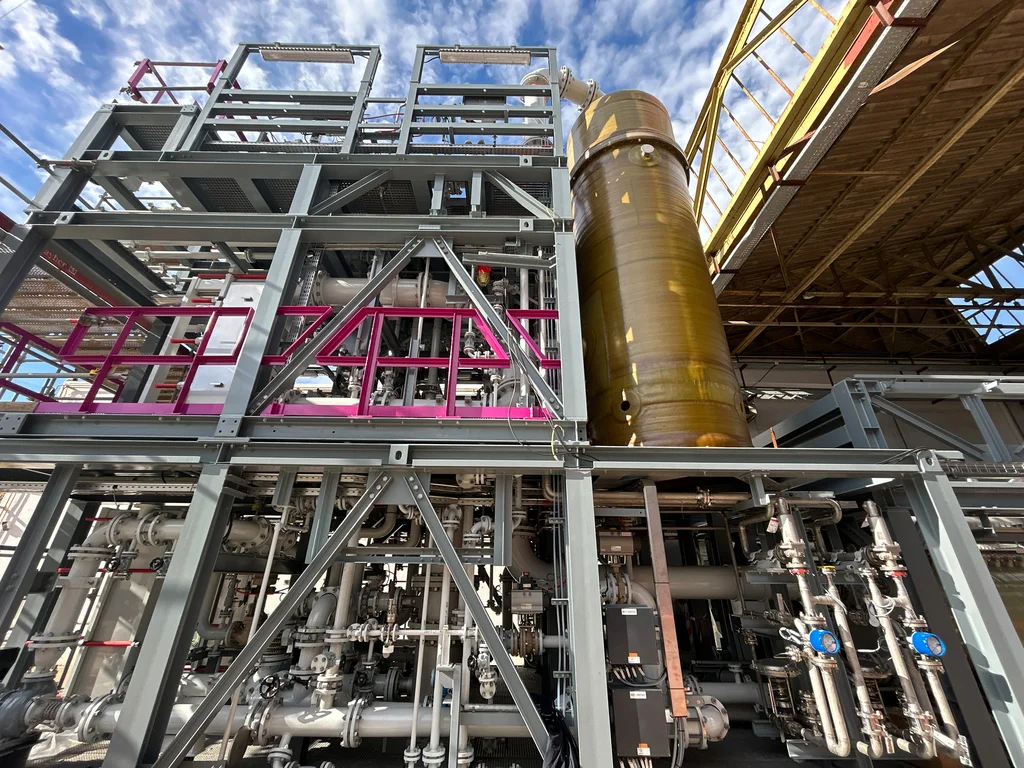
Onuba
- Middle East
-

NEOM
scalum® Electrolyzer for Industrial Green Hydrogen Production
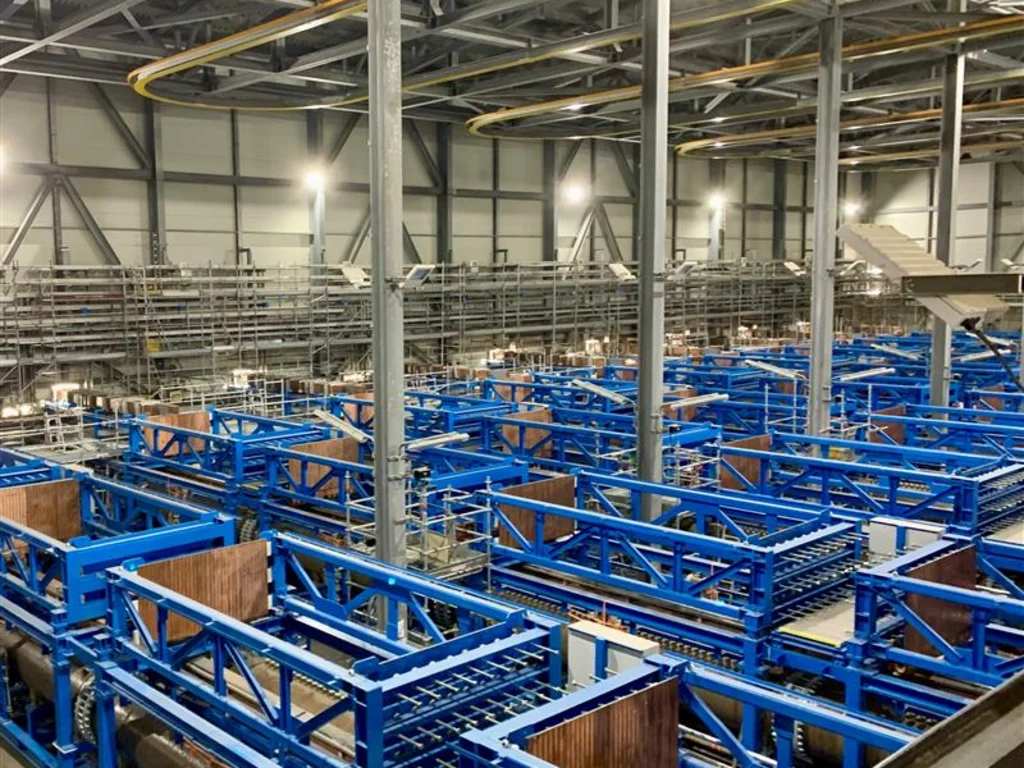
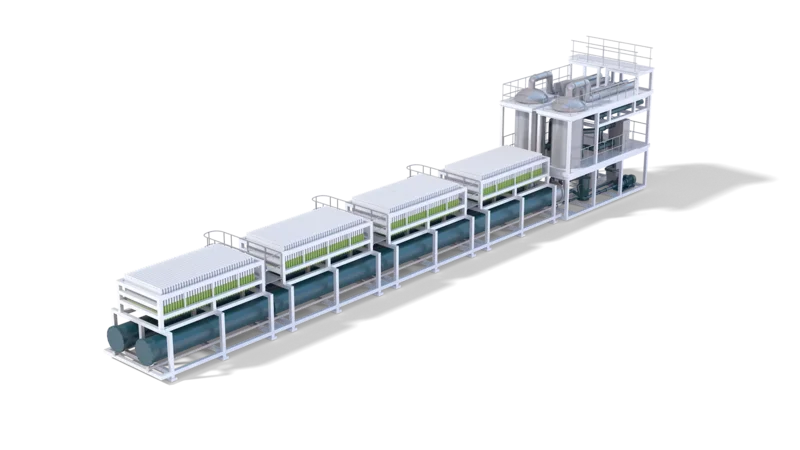
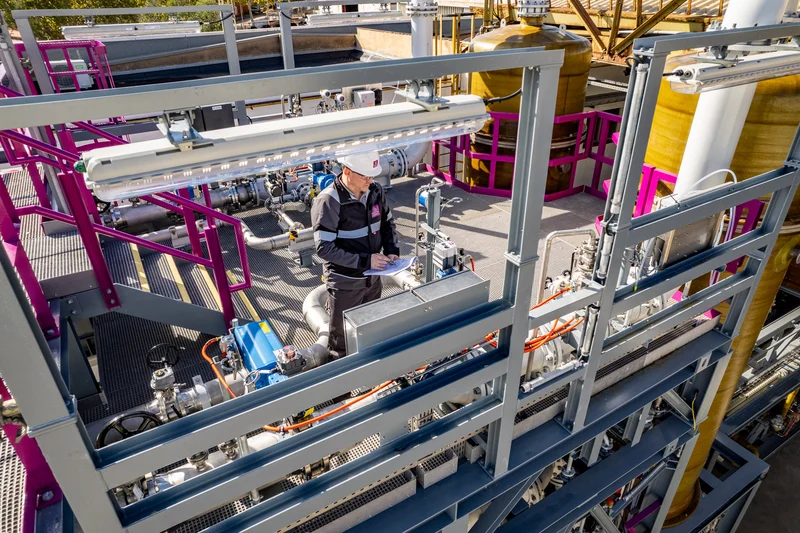
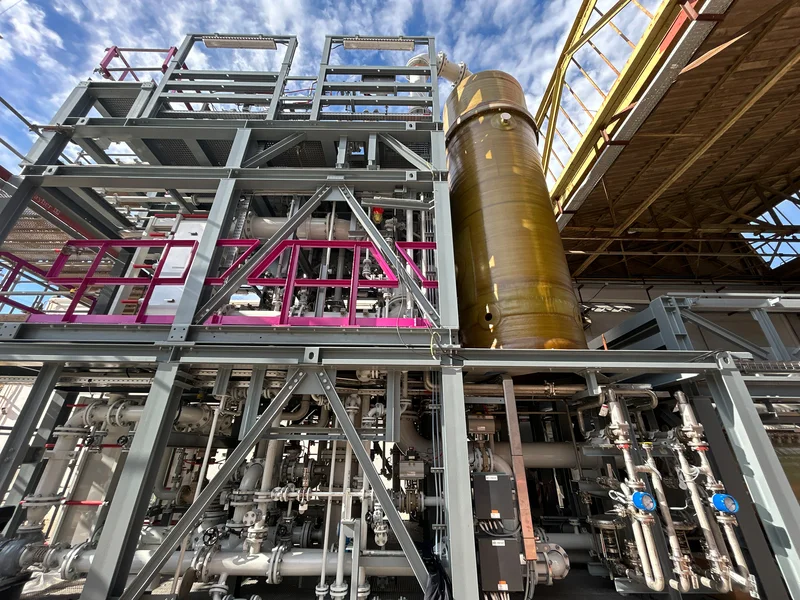
Our 20 MW scalum® unit is engineered for gigawatt-scale hydrogen production. With modular scalability, high availability, and dynamic operation, the scalum® electrolyzer unit supports industrial hydrogen applications across sectors – including refineries, steel plants, and downstream derivative production such as ammonia, methanol, and e-SAF. scalum® transforms large-scale hydrogen visions into industrial reality.
-
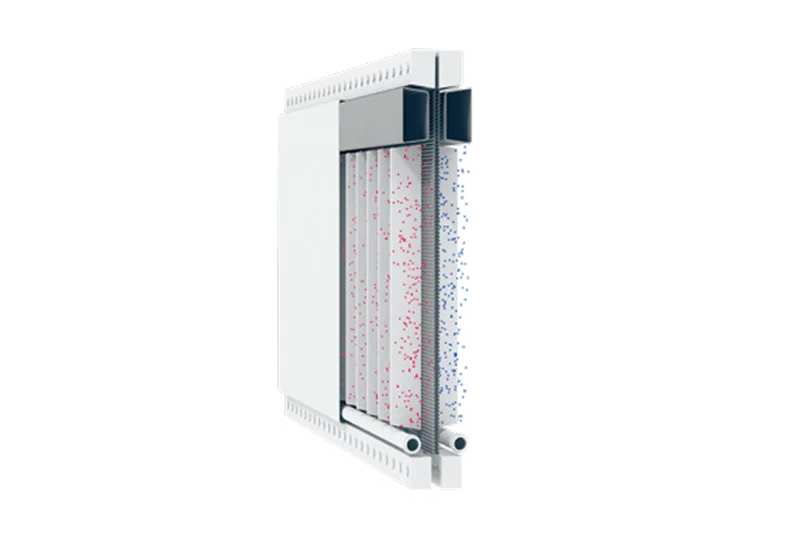
Single Element
Single-cell design ensures flexibility, high durability, and long cell life – already proven in chlor-alkali electrolysis.
Our high-performance cells are based on decades of proven chlor-alkali technology.
Each cell is individually removable from the cell rack, allowing for targeted maintenance without dismantling the entire stack. This minimizes downtime and significantly reduces maintenance costs.
The cells are designed for multiple reuse cycles and only require refurbishment, not full replacement.
Integrated condition monitoring of each single-cell element enhances plant safety and reliability.
-
scalum® 20 MW Electrolyzer Unit
Dynamic operation: Fast dynamics and wide operating range for renewable energy fluctuations, ensuring stability and reliability.
Maintainability: Holistic service portfolio supported by global network to ensure best possible electrolyzer performance
Compact footprint: High current density and modular design enable space-saving installation for industrial green hydrogen plants.
Optimization: Our dedicated R&D roadmap focuses on automating serial production to deliver high capacities at reduced costs and lead times.
Service and support: We offer full lifecycle support through our global service network – ensuring reliable performance and long-term success.
Digitalization: Our digital solutions like nucera evaluator, nucera load balancer and Digital Twins improve safety, optimize energy use and enable predictive maintenance through continuous operational insights.
The foundational design for our scalum® has been certified by TÜV Rheinland to meet the requirements of Chapter 4 of ISO 22734:2019. Our continuously ongoing product development will be backed by upgraded certification.
-
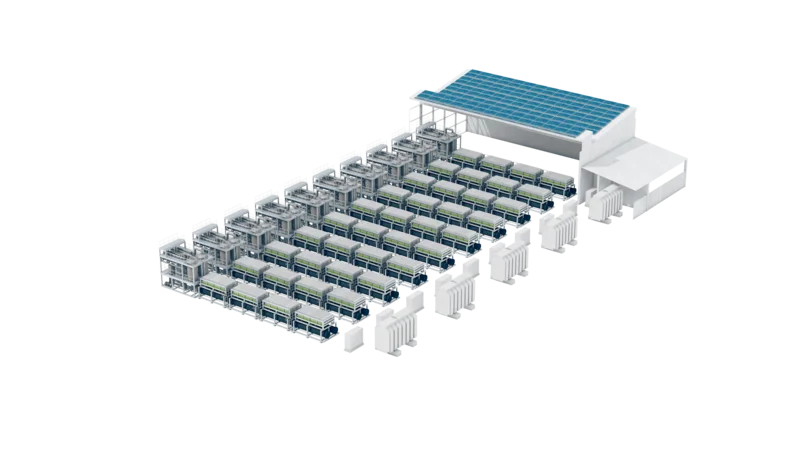
Modular Electrolysis Plant
When the world demands hydrogen projects from hundred-megawatt to gigawatt-scale, you need a solution that’s:
modular
reliable
efficient
ready to scale to from megawatt to gigawatt level
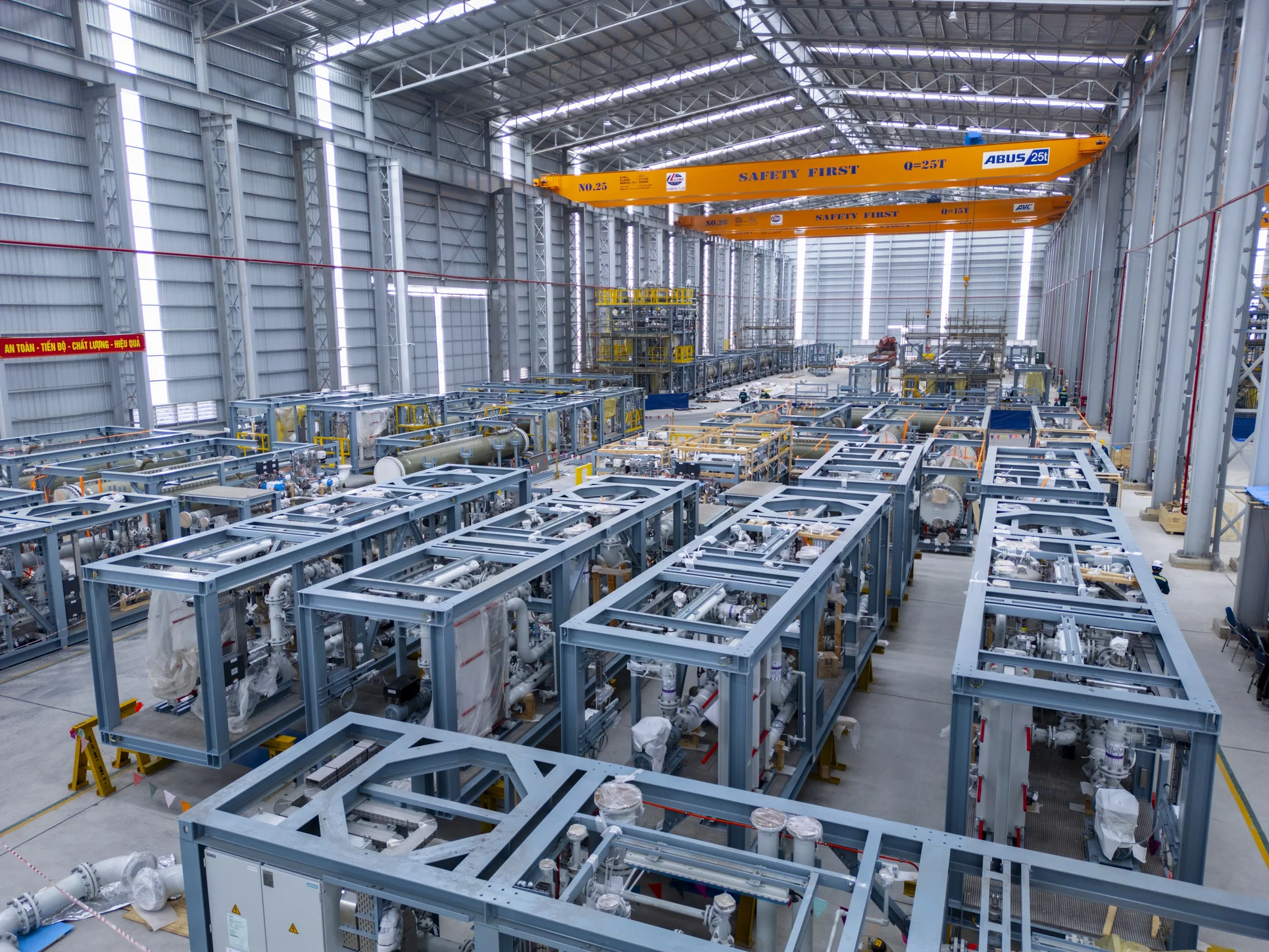
Our prefabricated, skid-mounted electrolysis plants enable rapid deployment and scalability. With our deep-rooted EPC expertise, we deliver reliable hydrogen infrastructure for industrial-scale decarbonization.
Service Portfolio for Alkaline Water Electrolysis
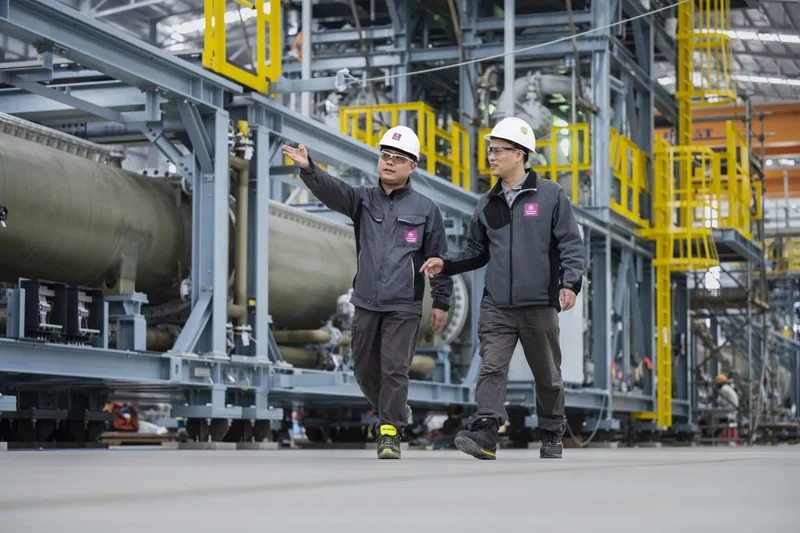
Our global service network ensures optimal performance of your alkaline water electrolyzers – from installation to maintenance and upgrades. Benefit from decades of experience and tailored service solutions.
More on Green Hydrogen
Here you’ll find in-depth information on projects, partnerships, and technological developments related to thyssenkrupp nucera and the green hydrogen economy.
Frequently Asked Questions
- What are the advantages of alkaline water electrolysis (AWE) compared to proton exchange membrane (PEM) – and which technology is better for industrial green hydrogen production?
-
At thyssenkrupp nucera, we rely on AWE because it is the most mature and cost-effective technology available today and characterized by high long-term stability. Compared to proton exchange membrane (PEM) electrolysis, AWE offers clear key advantages for large-scale applications:
Lower initial investment
Widely used for industrial-scale H2 production
Scalability for large-scale production
Dynamic operation capability suitable for fluctuating renewable power input
Simpler maintenance and operation
AWE is the only technology currently ready to meet the massive hydrogen demands of the industry at large-scale and has been chosen for projects like NEOM (Saudi Arabia).
- What are the lead times for thyssenkrupp nucera electrolyzers, and how do you reduce them?
-
We accelerate project execution through modularization and prefabrication. Our standardized, skid-mounted units are prefabricated off-site, minimizing on-site construction time, reducing installation risks, and ensuring consistent quality. This approach delivers faster time-to-operation, greater planning reliability, and scalable solutions that grow with demand.
- Can thyssenkrupp nucera’s alkaline water electrolysis systems operate dynamically with fluctuating power of renewable energy sources?
-
Yes, our alkaline water electrolysis (AWE) technology is fully capable of dynamic operation. With a minimum load of just 10% of 20 MW, our system offers outstanding flexibility to accommodate fluctuating power supply, making it ideally suited for coupling with renewable energy sources such as wind and solar. We successfully demonstrated this capability as early as 2019 in our 2 MW Carbon2Chem® pilot plant. Our scalum® AWE units respond flexibly to variable power input which our proprietary load balancer translates into the optimized production of green hydrogen.
- Can thyssenkrupp nucera’s alkaline water electrolysis technology compete with Chinese electrolyzers?
-
Absolutely. What differentiates thyssenkrupp nucera’s alkaline water electrolysis technology is:
Single cell technology:
Refurbishment instead of stack replacement
Cell monitoring allowing for preventive maintenance on single-cell level
High operating range between 10-100%, supporting fluctuating renewable energy usage
Low current losses by design, avoiding leak currents, stray currents, and bypass currents
High current densities, leading to smaller footprints
These features ensure high efficiency, reliability, and long-term cost advantages – enabling thyssenkrupp nucera to compete successfully with Chinese electrolyzers and deliver globally competitive hydrogen production economics.
- What are the advantages of the single cell concept?
-
The single cell concept is a key differentiator of thyssenkrupp nucera’s alkaline water electrolysis technology. Unlike conventional systems, our design allows each individual unit to be serviced independently – without shutting down the entire plant. This feature significantly increases operational flexibility, reduces downtime, lowers maintenance costs, and increases plant availability. It also enables precise condition monitoring at cell level, enhancing operational safety and long-term performance. For industrial-scale hydrogen production, this means greater reliability, flexibility, and cost efficiency.