Three Things Europe Needs to Turn Hydrogen Ambition Into Industrial Reality
An electrolyzer is not something you buy for next year. You buy it for the next 20 or 30 years. That is a long time in business – and an even longer time in politics. When our customers invest in an electrolyzer, they are making a bet on the future: On energy prices, demand and infrastructure. And on the technology and industrial capabilities they will be able to rely on for decades. At thyssenkrupp nucera, we take that responsibility seriously. We develop and deliver large-scale electrolysis technology.
Three Things Europe Needs
We know what it takes to turn engineering into industrial reality. And we know that technology alone is not enough. The hydrogen industry has never suffered from a shortage of ambition. What we need now are more projects. At some point, potential needs to become a purchase order. For Europe to turn its hydrogen ambitions into industrial reality, I am convinced that three things must come together:
- competitive energy,
- strategic choice,
- and industrial execution.
Let me explain why.
Competitive Energy: Europe needs it at scale – electrolysis can make it possible
You cannot produce competitive hydrogen with uncompetitive electricity. Let me put this into perspective: Producing one kilogram of hydrogen takes roughly 50 to 55 kilowatt-hours of electricity. At 4 cents per kilowatt-hour, that means at least 2 euros in electricity costs alone. At 10 cents, the bill rises to more than 5 euros. Same technology. Same kilogram of hydrogen. More than twice the electricity cost. And that is before you pay for the electrolyzer, financing and operation. That is why electricity prices matter so much. They are the biggest single cost driver in renewable hydrogen production.
We can make our technology more efficient, standardize our products, reduce capital costs, and optimize performance over the lifetime of a plant. And we will continue to do so. But we cannot engineer our way out of structurally uncompetitive power prices. And if Europe cannot produce competitive hydrogen, it will struggle to keep energy-intensive industries competitive. Competitive energy is not just a hydrogen issue, but an industrial competitiveness issue.
This is where electrolysis comes in. It connects renewable electricity with industrial value creation. It turns electricity into molecules that can be stored, transported and used where direct electrification is not enough. It can also help the power system become more flexible.
Electrolyzers can adjust their operation to electricity availability. Where the economics and system conditions allow, they can use renewable power. Power that would otherwise go unused. In other words: electrolysis can help connect Europe’s renewable energy potential with the needs of its industry.
But we must look at the whole system:
- renewable power,
- electricity grids,
- hydrogen pipelines,
- storage and industrial customers.
These are not separate things – they are parts of the same equation. And that equation does not stop at national borders. Some locations will be particularly attractive for producing renewable hydrogen. Others will be closer to industrial demand. Europe needs to connect competitive production with the places where hydrogen is needed. This means developing production, infrastructure and demand together. The principle is simple: Europe needs competitive, secure energy at scale. Electrolysis can make that possible.
Strategic Choice: Europe needs a strong base and partnerships abroad
But competitive energy is only part of the story. We must also ask a second question: Where will the technologies and industrial capabilities we depend on come from? An electrolyzer is a long-term investment. Its true cost is not determined by the initial purchase price alone. Performance, efficiency, availability, service and reliability matter over the entire life of the plant. That is why we need to look beyond the cheapest initial offer. A piece of technology can look inexpensive on day one – and become very expensive if critical components, services or supplies are no longer available when you need them.
And there is another cost we should not overlook: the cost of losing choice. If Europe becomes dependent on a single external source for a critical technology, it may lose more than manufacturing capacity. It may lose the ability to choose its suppliers. It may lose the ability to shape its industrial future. And it may lose the ability to respond when circumstances change.
A cheap technology can become very expensive when it is the only technology you can still buy. That is why resilience matters. And let me be clear: resilience does not mean isolation. It does not mean producing everything in Europe or turning away from international markets. It means having choices. Choices in technology, supply, or industrial partners. And the ability to make our own strategic decisions. Europe still has important technological and industrial capabilities in electrolysis. But leadership does not sustain itself. Leadership without scale will not last.
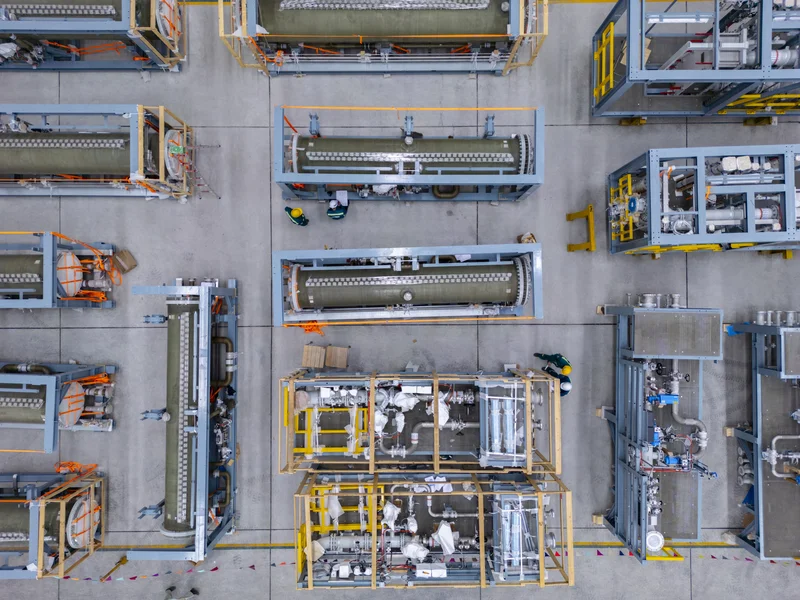
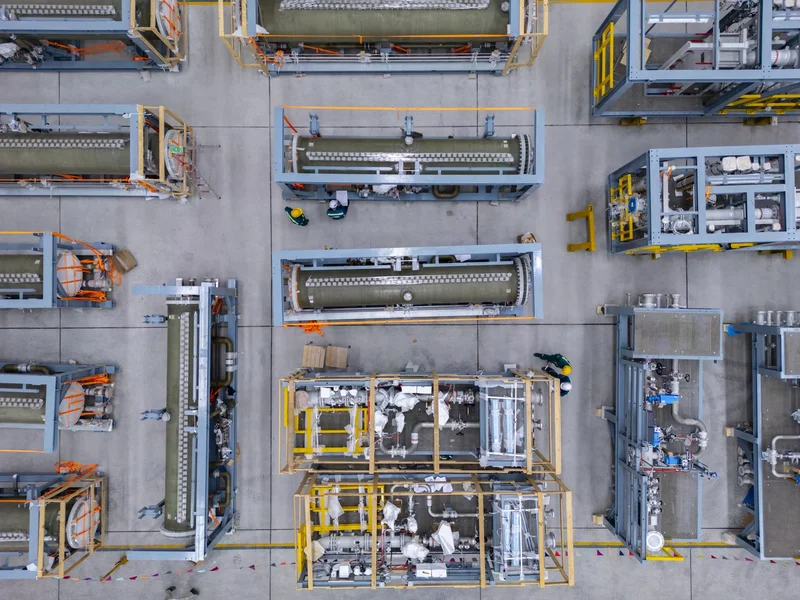
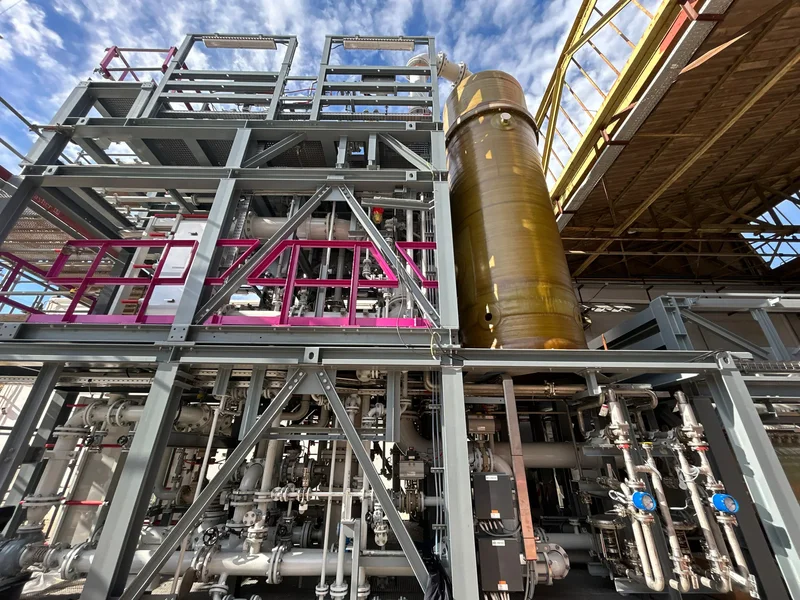
That is why we are investing in our own industrial capabilities: In Portugal, we are establishing our first company-operated Assembly Hub for electrolyzer cells. It will centralize and semi-automate assembly, strengthen our European value chain, and bring manufacturing and service closer together. This is what industrial resilience looks like in practice. A real investment in manufacturing capacity, industrial skills, and project execution.
At the same time, we are building partnerships beyond Europe: In India, we are working with Bharat Heavy Electricals Limited to support local manufacturing capabilities and project delivery. And to help develop the hydrogen ecosystem.
These are two sides of the same strategy. We strengthen industrial capabilities in Europe while building partnerships that create value in other markets. It is not a contradiction. It is how international industry works.
For Europe, the task is clear: Its own industrial capabilities must remain competitive. And European technology must remain a genuine choice in global markets. The Industrial Accelerator Act and other initiatives should support that objective. They should support European industry without undermining international cooperation. Because the choice is not between a strong industrial base at home and partnerships abroad. Europe needs both.
Industrial Execution: Public money should unlock private capital
Europe has spent years setting hydrogen targets, developing strategies and establishing rules. Of course, we need rules. But they should help make industrial projects possible, not make them harder to deliver. And projects only move forward when customers and investors can build a credible business case.
Today, the debate about the future of binding renewable hydrogen targets beyond 2030 illustrates the challenge. The discussion around RED IV is not yet legislation. But uncertainty about future rules can already affect investment decisions. Remember what is at stake. A industrial plant is designed to operate for decades.
Investors cannot make a long-term commitment if the underlying market conditions remain fundamentally uncertain. We have done our part. At thyssenkrupp nucera, we have developed competitive technology, industrialized our products and built the capacity to deliver at scale.
Our responsibility is clear: deliver technology that performs, reliably and efficiently, over the lifetime of a plant. But we cannot create the entire market ourselves. We cannot build the necessary infrastructure on our own. And we cannot eliminate uncertainty about public policy.
Responsibilities must be shared. Companies must carry the risks of technology, efficiency and project execution. Public actors must address the policy, infrastructure and early-market challenges that individual companies cannot solve alone. And public money should not replace private capital. It should unlock it.
We need reliable demand, infrastructure that develops alongside production, and rules that investors can plan around. Not because industry wants to avoid risk. Investors need to understand the risks they are taking. And they need to know which conditions they can rely on.
Let me give you a concrete example: The 300-megawatt Onuba project in Spain shows what becomes possible when ambition begins to translate into industrial investment. We will supply 15 standardized 20-megawatt scalum® units. That is a substantial project. It demonstrates the potential of standardized technology and large-scale electrolysis.
But it also reminds us how much further we need to go. Projects of this scale must become more than exceptions. They must become repeatable. The real test is not whether we can deliver one large project. It is whether we can make projects like this the basis for an entire market. That means learning from each project, improving technology, reducing costs, and building the conditions for the next investment.
And it means making the rules work for industrial reality. Regulation should support the development of a competitive market, make green hydrogen easier and cheaper to produce. Not easier to avoid buying.The next phase of Europe’s hydrogen journey is not about setting new targets. It’s about translating targets into contracts, final investment decisions and operating plants. It’s not about announcing more ambition. It’s about delivering at scale.
We Need to Change How We Measure Success
Let me bring these three points together. First, competitiveness starts with energy. Without competitive, secure electricity, Europe cannot build a competitive green hydrogen industry.
Second, resilience means choice. Europe must remain capable of developing, producing and choosing the technologies on which its industrial future depends.
Third, we know how to build it. Now we need to scale it.
These three challenges are connected: Competitive energy creates the economic foundation. Industrial capabilities preserve strategic choice. And execution turns both into results.
Europe has important technological capabilities. Companies are investing. Projects are moving forward. Now we need to bring the pieces together. Industry must deliver. Europe must enable.
Success should not be measured by how many targets we announce. It should be measured by the investments we unlock, the plants we build and the industrial value we create.
The technology is here. Industrial capabilities are here. Now, let’s turn Europe’s ambition into industrial reality.
Author
CEO, thyssenkrupp nucera