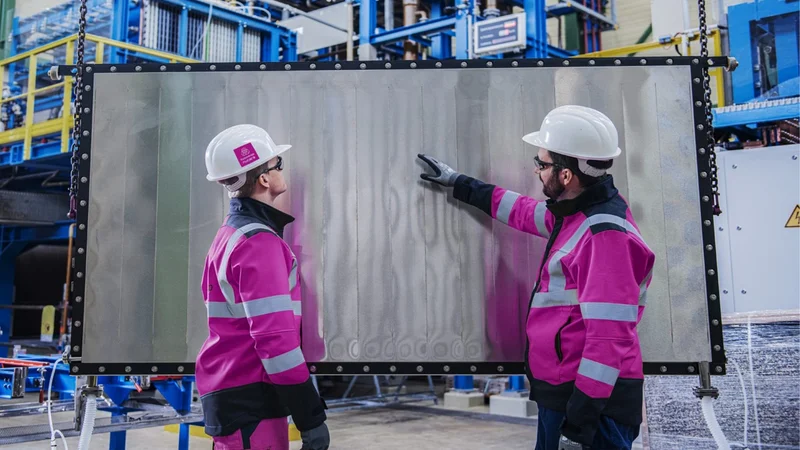
Out of 132 submitted bids, boasting over 8 million tons of intended hydrogen production capacity and 8.35 GW of electrolyzer capacity, the two winning projects, each at 500 MW, stood out as the largest submitted. This is an encouraging sign for the execution of more large-scale electrolysis projects within Europe. “If regions like the EU, the U.S., and others want to be global hydrogen leaders, they need to establish large-scale projects for green hydrogen production.” says Dr. Christoph Noeres, Head of Green Hydrogen at thyssenkrupp nucera. “Only projects at scale allow for cost-effective production of green hydrogen, only large-scale projects can fill pipelines or decarbonize steel plants. That is why it is so important that the first round of the hydrogen bank domestic leg auctions includes projects in the 500 MW range.”
How can Europe stay competitive in the energy transition?
All submitted projects were required to include a Letter of Intent (LOI) with at least one electrolyzer manufacturer. According to data from the EU Commission, the majority of projects plan to source electrolyzers within Europe, predominantly from Germany, which accounts for 24 LOIs. China follows closely, with at least 20 projects intending to procure electrolyzers from Chinese manufacturers. This highlights the global nature of the electrolyzer market and prompts a careful assessment of whether European funding truly benefits European companies, and by extension, European society as intended.
Global competition is beneficial, and companies like thyssenkrupp nucera are thriving with projects in the US, Brazil, and Saudi Arabia. However, within the European Hydrogen Bank auction, it is crucial to remember that European tax funds are being utilized, and these should primarily support European companies. Many other regions have similar support programs. For Europe to remain competitive and sustain its leadership in green hydrogen, it is vital to launch significant projects within the continent.
The hydrogen bank’s plan to offer up to €4.50 per kilogram of green hydrogen as a premium to producers is a positive step towards aligning with incentive schemes like the IRA. Additionally, the EU’s decision to exclusively fund green hydrogen, unlike the US, which also supports blue and pink hydrogen, is a commendable direction.